The History and Psychology of Spinning Wheels: From Rota Fortunae to TikTok
Spinning wheels are older than printing, older than electricity, older than most countries. The medieval philosophers used them as a metaphor for fate; casinos built empires on them; TV game shows turned them into prime-time entertainment. They keep coming back because they tap into something specific about how humans handle uncertainty.
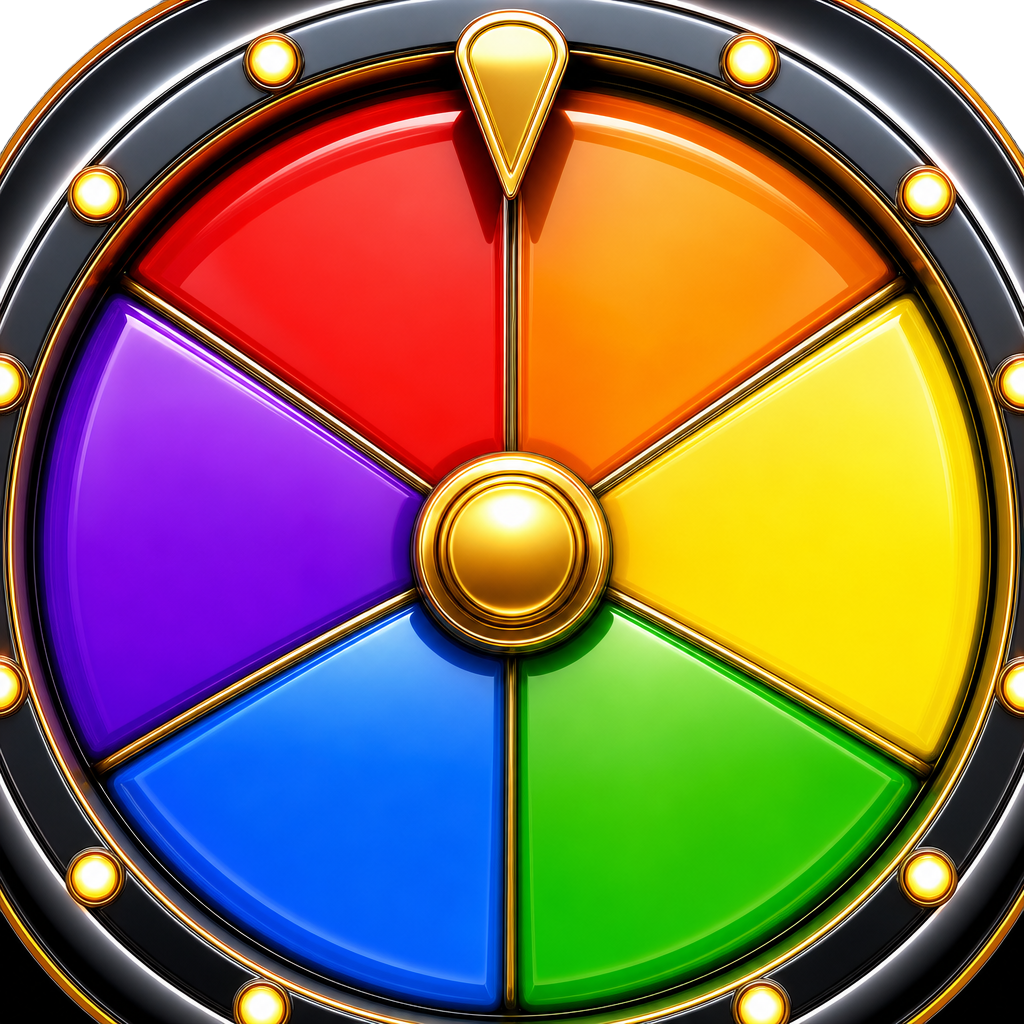
There is a curious continuity between the medieval monk meditating on fate, the roulette player at Monte Carlo, the studio audience watching Pat Sajak in 1985, and the teenager filming a mystery wheel video on TikTok last week. They are, in a real sense, all doing the same thing. They are watching a wheel spin and waiting to see what chance decides. The technology has changed several times. The format hasn't really changed at all.
This essay is the long version of why the wheel as a cultural object has been so persistent, why it works on the human brain in a way that coins and dice don't, and how the same psychology shows up in everything from casino math to the way kids design TikTok content today. If you build, use, or just enjoy spinning wheels, the history is more interesting than you'd expect.
Rota Fortunae: the medieval Wheel of Fortune
The image of Fortune turning her wheel is one of the most-reproduced motifs in medieval European art. It appears in cathedral stonework, illuminated manuscripts, university lectures, and the opening pages of Boethius's Consolation of Philosophy, a book that essentially every educated person in Europe read for a thousand years. The image is always roughly the same: a giant wheel, four human figures at the four cardinal points, the goddess Fortuna at the center. On the way up, a figure declares 'regnabo' — I shall reign. At the top, crowned, 'regno' — I reign. On the way down, 'regnavi' — I have reigned. At the bottom, crushed, 'sum sine regno' — I am without a kingdom.
The medieval Wheel of Fortune wasn't a random selector. It was a meditation on the impermanence of worldly success. The lesson Boethius extracted from it — that nothing fortune gives you is really yours, because she can take it back at any moment — was central to European thought for centuries. The wheel as a visual was so culturally dominant that when the first commercial gambling wheels appeared in the eighteenth century, the metaphor was already fully formed. Everyone already knew what a spinning wheel meant. Casinos didn't have to invent the symbolism; they inherited it.
What's striking, looking back, is that the medieval Wheel of Fortune was understood as deeply unfair — Fortuna was blindfolded, she didn't care about your virtue or effort, the spin was capricious and cruel. The modern decision wheel inverts the moral charge. We spin a wheel today precisely because it doesn't have preferences. The thing that made Fortuna terrifying — her blindness — is exactly what makes a random name picker trustworthy. Same image, opposite meaning, eight hundred years apart.
Roulette and the birth of casino mathematics
The roulette wheel as we know it is a French invention, refined in the eighteenth century, made famous in nineteenth-century Monte Carlo, and exported globally with the rise of the modern casino. Its design is a small marvel of mathematics dressed up as red and black. The pockets alternate colors, the numbers are arranged so that consecutive numbers are diametrically opposed (the sum of any two opposite pockets on a European wheel is 37), and the single green zero pocket is the entirety of the house's mathematical edge.
Roulette is also the wheel that taught Western culture how to think about probability. When the casino at Monte Carlo had a famous run in 1913 where the ball landed on black twenty-six times in a row, gamblers around the world lost enormous sums of money betting on red, convinced it was 'due.' This is the gambler's fallacy in its purest form, and roulette is the case study every statistics textbook uses to explain why it's wrong. Each spin is independent. The wheel doesn't remember what it just did.
The cultural residue is significant. Roulette is the reason most people, even non-gamblers, have an intuition for what 'odds' means. It's why we casually say 'spin the wheel and see' for any uncertain situation. It cemented the wheel as the dominant visual metaphor for chance, displacing the older imagery of dice (Roman) and lots (biblical). Modern random pickers benefit from this. We don't have to explain what a wheel does. Centuries of casino culture have done that work for us.
The game show wheel
The Big Six Money Wheel, a carnival game from the early twentieth century, evolved into the wheels you see on television every weeknight. Wheel of Fortune debuted on American television in 1975 and is, by some measures, the most-watched syndicated show in television history. The Price Is Right's Big Wheel, introduced in 1975, has been one of the most-anticipated segments of the show for nearly fifty years. Game show wheels are arguably more culturally embedded in the United States than the casino wheels they descended from.
What makes a game show wheel work as television is the same thing that makes a decision wheel work in a classroom: visibility. The audience sees every slice. The audience sees the spin start. The audience can predict roughly where the wheel will stop, and then it ticks past their guess and lands one slice further, and the reaction is the show. Game show producers figured out decades ago that the moment of suspense between the slowing-down and the landing is the most engaging beat in the format. The actual prize matters less than the spin.
Modern digital wheels copy this carefully. The ease-out curve on a digital wheel's deceleration is engineered to mimic the physics of a real spinning wheel. The clicking sound as the pointer flicks past each peg is added because it amplifies the suspense. None of this is for randomness — randomness was achieved the instant the random number was generated. All of it is for the moment. The wheel is theater wrapped around a function.
Why wheels feel fairer than coins
The psychology of perceived fairness is its own field, and it has clear answers about why wheels feel fairer than coin flips even when the underlying randomness is identical. The reason is procedural transparency. With a coin, you see two sides, and then a result. With a wheel, you see every option simultaneously, and you watch the selection process unfold in real time. There is no moment where the result could have been swapped behind your back. The wheel makes its decision in front of you, slowly, and you can verify every part of the process.
Studies on group decision-making confirm what teachers and event hosts already know: the visible randomization process matters more than the actual probability distribution for whether people accept the result. A wheel that gives one option 50% odds (by occupying half the wheel) is accepted as fair because everyone can count the slices. A black-box algorithm that gives one option 50% odds is contested because nobody can verify the math. Visibility is the entire game.
There's a second factor: the kinetic ritual. Spinning a wheel takes time. The audience commits to watching. The slow deceleration creates a shared experience that a coin flip — over in half a second — never produces. By the time the wheel lands, the room has emotionally agreed that the result matters and that they were all there to see it. The decision feels more legitimate because the process was witnessed, ceremonially, by everyone present.
How digital wheels actually generate randomness
The randomness in a modern digital wheel doesn't come from the spinning animation. The animation is decoration. The actual selection happens when the code calls a random number generator, picks an angle, and then animates the wheel to land at that angle. The good random number generators — cryptographically secure ones like the browser's crypto.getRandomValues() API — produce outcomes that are, for all practical purposes, indistinguishable from true randomness. Every option on the wheel has exactly equal odds, every spin is independent, and no amount of statistical analysis of past spins can predict the next one.
This is actually more random than a physical wheel. A physical wheel has friction patterns, manufacturing tolerances, dust on the bearings, slight warping from temperature changes. Over many spins, a physical wheel develops microscopic biases that slightly favor certain pockets — this is the entire premise of the 'biased wheel' attacks that brought down a few European casinos in the nineteenth century. A digital wheel has none of those problems. It is, in the strict mathematical sense, fairer than any physical wheel ever made.
The TikTok mystery-wheel renaissance
Around 2018, the 'mystery wheel' format went viral on YouTube and then exploded on TikTok. The structure is unbearably simple: a wheel of dares or challenges, a creator who spins, a reaction. The reaction is the content. Channels with millions of subscribers were built almost entirely on this format. The reason it works is the same reason game shows work — suspense plus surprise — compressed into a sixty-second video that an algorithm can feed to a million people.
What's interesting about the TikTok mystery wheel is how it reintroduced the wheel to a generation that hadn't grown up with Wheel of Fortune. For viewers under twenty-five, the wheel as a cultural object was reset by social media. It became, again, a tool for spontaneous group play rather than a televised institution. The lineage from Boethius to Pat Sajak to a kid filming a peanut butter dare in their bedroom is direct, and the underlying appeal hasn't changed: a visible process, an unpredictable outcome, a reaction worth watching.
Wheels in education research
There's a small but real research literature on random calling in classrooms, and the findings are consistent. Random name selection increases participation across the class compared to teacher-selected calling. The effect is most pronounced for students who would otherwise rarely volunteer — usually quieter students, English-language learners, and students from groups that experience implicit bias in teacher attention. The participation gains hold up over a school year as long as the random calling is paired with low-stakes prompts and a no-shame pass rule.
These findings have been around since at least the early 2010s, and they're robust enough that some teacher-preparation programs now teach random calling as a standard equity practice. The digital wheel is the tool that made this scalable. A jar of popsicle sticks works for a class of thirty, but it's slow and the kids can see which sticks have been used. A digital wheel is faster, more visually engaging, and trivial to reset between classes.
The future: AI-curated wheels and personalized randomness
The most interesting development in random pickers in the last few years isn't the wheel itself, which is fundamentally a solved problem. It's the wheel-building tool. AI generators can now take a one-sentence prompt — 'date night ideas under twenty dollars,' 'random fantasy character names,' 'icebreaker questions for a team of engineers' — and produce a ready-to-spin wheel in seconds. The randomness of the spin is preserved; the curation of the options is offloaded to a model that has read everything on the internet about the topic.
This changes the cost of building a wheel from 'twenty minutes thinking up options' to 'twenty seconds typing a sentence,' which means wheels get built for decisions that previously weren't worth the effort. The medium-term effect is that random selection becomes ambient — embedded in scheduling tools, embedded in classroom software, embedded in the parts of daily life that involve recurring small choices. The wheel as a metaphor will outlive everything currently fashionable in software design. It has already outlived empires.
A few words on why this matters
Spinning wheels have persisted across roughly a thousand years of recorded use because they map onto something real about how humans process uncertainty. We are not good at accepting outcomes we feel we could have prevented. We accept outcomes much more easily when they arrived through a visible random process we all watched. This is true at every scale — kids fighting over the last cookie, juries assigning damages, families picking a holiday destination, casinos taking your money. The wheel is a piece of social technology for accepting outcomes you can't control.
When you spin a wheel today to decide what to make for dinner, you are, in a small way, doing what Boethius's readers did when they contemplated Fortuna's wheel. You are agreeing to accept what chance decides. The stakes are obviously lower. The mechanism is the same. The persistence of the spinning wheel through every cultural and technological shift in the last millennium is, in the end, a small monument to how much easier life gets when you stop trying to control every outcome and let the wheel do the work.