The Complete Guide to Random Decision-Making: When to Use a Wheel, When to Trust Your Gut
Most of us treat random decision tools as gimmicks. They're not. Used in the right zone — small, recurring, low-stakes choices — randomness is one of the most under-rated mental-health upgrades you can build into your week.
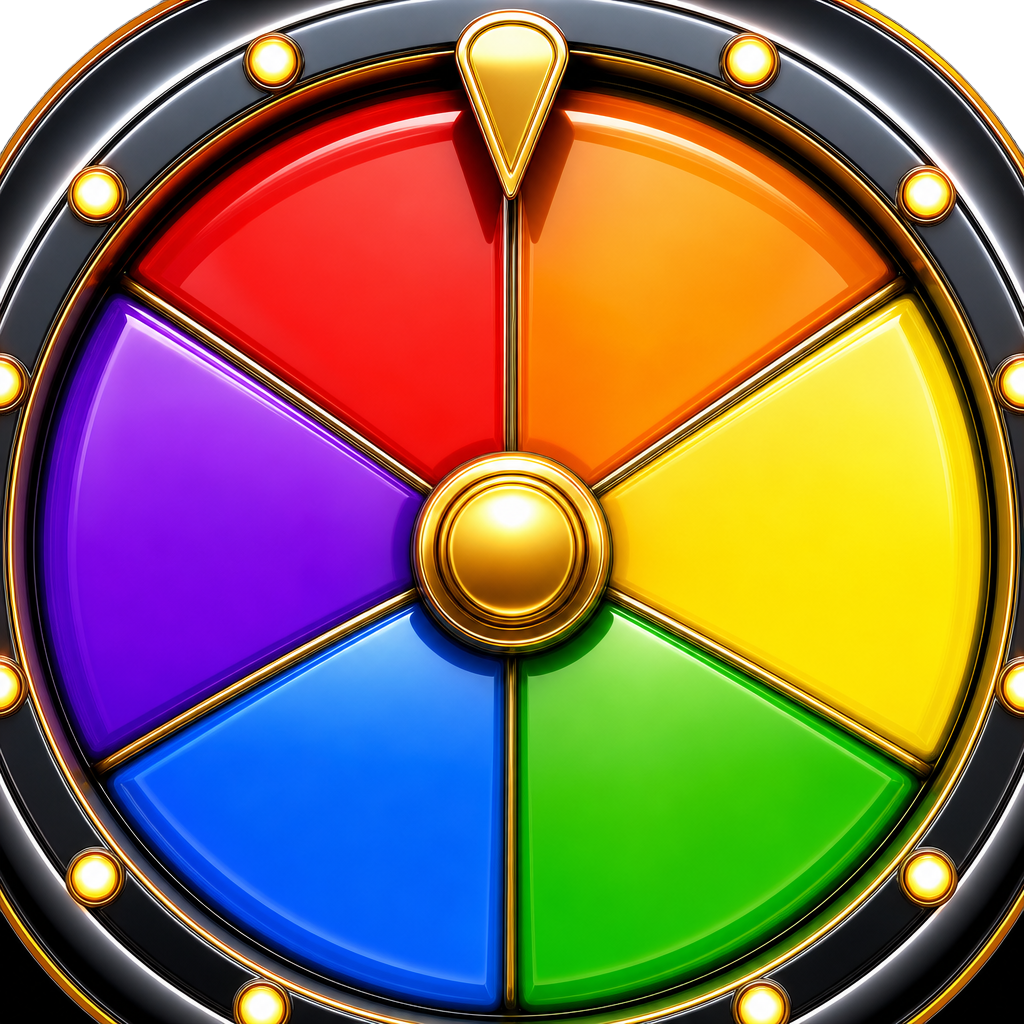
There is a category of decisions in your life that you make hundreds of times a week and almost never get right. They are not the big decisions — what job to take, who to marry, where to live. Those are deliberate by necessity. The decisions I'm talking about are the tiny, recurring, low-stakes ones: what to cook, what to watch, which task to do next, whose turn it is to pick the music. You make a hundred of these every day and you waste real energy on each one. By dinner time, you're exhausted not because you worked hard, but because you spent the day choosing.
Randomness — a coin, a die, a wheel — fixes this specific category of decision better than any other tool. Not because random choices are smarter. They aren't. Because random choices remove the cost of choosing at all. This guide is the long version of how to use random decision tools well: when they actually beat deliberation, when they're the wrong move, and how to build a personal system that takes maybe ten minutes to set up and saves you hours every week.
Why your brain hates small decisions
Three things are happening at once when you stand in front of the fridge trying to decide what to eat. First, you are running through a mental list of options — last night's leftovers, the half-bag of pasta, the takeout menu, the recipe you saved last Tuesday. Second, you are mentally rejecting most of them based on faint preferences you can't articulate. Third, you are dreading the moment you commit, because if you commit and the meal is mediocre, that's on you.
Psychologists call this combination 'decision fatigue,' and the effect is well-documented. After a certain number of choices in a day — the number is genuinely individual, but for most adults it's somewhere around 100 to 200 small decisions — your prefrontal cortex starts cutting corners. You default to the easy option. You take the path of least resistance. You eat cereal for dinner not because you wanted cereal, but because cereal removed the need to keep choosing. The wheel can do the same thing without the side effect of disappointment.
There's a second, related effect: the paradox of choice. Barry Schwartz's research from the early 2000s holds up — more options make people less happy with what they pick, not more. Six jam flavors at the supermarket outsold twenty-four because the smaller selection meant fewer regrets. The same is true of every weeknight dinner question. The bigger your mental menu, the more you spend grieving the options you didn't pick. Random selection collapses the menu to one and lets you eat.
The three categories of decision
Not every choice belongs on a wheel. The first move in building a random-decision system is sorting decisions into three buckets. Random-safe decisions are ones where every option in your candidate list is roughly equally good and the outcome doesn't change your life. Dinner, weeknight movie, who unloads the dishwasher, which podcast to listen to on a walk. Randomize these freely. Structured decisions are ones where a clear best answer exists if you think hard enough — which contractor to hire, which laptop to buy, which apartment to rent. Don't randomize these. Spend the cognitive effort. Values decisions are ones that depend on your priorities and identity — career changes, relationship choices, where to live. A wheel here is actively harmful. The answer should reflect who you are, not who chance is.
Most people use randomness exactly backwards. They overthink Tuesday dinner and improvise their career. The fix is to be ruthless about which decisions you outsource. If a decision involves cost over $200, time over a week, or a meaningful relationship, it's not a wheel decision. Everything else, probably, is.
When randomness genuinely beats reasoning
There are three specific situations where a random tool produces a better outcome than deliberation, not just a faster one. The first is when your candidate options are too similar to meaningfully rank. If you've shortlisted three restaurants and they all sound fine, the energy you spend ranking them is wasted — by definition, they were close enough to be tied. Spin and eat.
The second is when you suspect your own bias. You always pick the same takeout spot. You always reach for the same playlist. You always assign the easy task to the same kid. A random selector forces you out of the rut, and the result is sometimes genuinely better than what you would have chosen — not because randomness is wise, but because you are predictable.
The third is when fairness matters to a group. Who gets the front seat, who answers next in class, who has to pick the restaurant tonight — these aren't really decisions. They're allocation problems. A visible random tool that everyone watches removes any accusation of favoritism. Nobody can argue with a wheel they all saw spin.
The four random tools, compared
Coins are perfect for binary decisions where you don't need to justify the answer afterwards. They take two seconds and require no setup. The downside: you can't audit a coin flip after the fact, and the result feels disposable. If anyone in the room genuinely cares about the outcome, a coin won't satisfy them.
Dice extend the format to up to twenty options (with a d20) or more. They work in environments where the labels are obvious — board games, RPGs, anything where the rules of the game already map numbers to outcomes. They fail when you have to remember what each number 'meant' afterwards. 'Three was the Korean place, right?' is the sound of a system that has broken down.
Decision wheels are the right tool for anything between three and roughly thirty options where the choices have names rather than numbers. The slice carries the label. The spin is the show. The result is visible and shareable. Wheels also support visible weighted odds (add an option twice for double the chance), which is the cleanest way to bias randomness without lying about it.
List shufflers, which most random-decision apps support as a hidden feature, are useful when you want to consume an entire list in random order. Spin once, get a winner, remove it, spin again, until done. This is how to handle group draws, classroom rotation order, or a watchlist you're trying to clear.
Building a wheel that actually gets used
A wheel you build once and never spin again is a waste of effort. The wheels that get reused share four properties. They have between five and twelve options — fewer feels boring, more feels chaotic and the labels become unreadable. They have specific, concrete labels — 'Korean BBQ down the road' rather than 'Asian food.' They have a saved link that lives somewhere you'll actually look — pinned to a chat, bookmarked on your home screen, added to a shared family note. And they get pruned every few weeks, removing the options you stopped using and adding new ones as they come up.
The biggest unforced error people make when building a decision wheel is padding it with junk options to make their 'real' preference more likely to win. Adding 'cereal for dinner' to a wheel of nice meal ideas in the hope that the wheel will land on the nicer ones is self-defeating — you've made the wheel less random and more biased toward your existing preferences. If you want one option to win more often, add it explicitly twice. That's honest weighting, and the wheel will show it.
The commit rule
There is exactly one rule that determines whether a decision wheel works for you or wastes your time. First spin wins. If you spin and then spin again because you didn't like the result, you have learned nothing about what the wheel can do — you've used the wheel as theater while making the decision the old way. The wheel works because it removes the choice. The moment you re-spin, the choice is back, and you're worse off than if you'd just decided.
There is one productive exception. Spin the wheel and pay attention to your immediate reaction to the result. Relief is data — it means you actually wanted that option, and your earlier 'I can't decide' was a stalling tactic. Disappointment is also data — it means your gut already had a preferred answer and was hoping the wheel would confirm it. Either way, the reaction is the real output of the wheel. The spin was just the trigger. Use that information, but don't re-spin to hide from it.
Weighted wheels for unequal options
Sometimes the options aren't equal. You want pizza twice as often as sushi. You want to call on the quiet students more than the loud ones. You want to give the easy chores out more often than the gross ones. Weighted randomness handles all of this cleanly. The mechanism is simple: add the option to the wheel multiple times. Two slices means twice the odds. Three slices means three times the odds. The math is visible — anyone can count the slices and see why the wheel lands where it lands.
This is more honest than algorithmic weighting because nothing is hidden. Algorithmic weighting requires trust in the algorithm. Slice-counting requires only eyes. For any group decision where fairness matters, visible weighting is the only kind that holds up to scrutiny.
Random tools in groups: fairness, not chaos
The single highest-leverage use of a decision wheel is group fairness. Any time more than two people have to agree on something low-stakes, the wheel saves you an argument. The reason isn't that the wheel makes a better choice. It's that the wheel takes the choice out of any one person's hands, and that's what kills the negotiation.
The trick is to share the link before the spin, not after. Everyone seeing the same options on the same wheel is what makes the result indisputable. If you build the wheel privately and announce the result, you'll get the same arguments you were trying to avoid — 'how come pizza wasn't on the wheel?', 'why is sushi listed twice?'. Build it together, agree on the slices, then spin. The visible agreement on the inputs makes the random output unimpeachable.
Common mistakes that ruin a decision wheel
Spinning until you win is the most common one and the one I covered above. The second is using a wheel for a decision that wasn't actually random-safe — randomly picking a contractor, a job, a partner. The wheel can't tell you those answers because the answers depend on values, not chance. The third is letting the wheel ossify. The dinner wheel you built six months ago has options on it you stopped liking. The classroom wheel still has the student who switched schools in February. A stale wheel produces stale outcomes. Prune monthly.
The fourth mistake is treating a wheel as a moral judgment. If the wheel lands on the boring option, that's not a verdict on the boring option — it's just where the pointer stopped. The wheel doesn't have preferences. Don't act like it does. Spin, accept, move on.
A weekly random-decision system
If you want to put this into practice, here is the smallest version of a system that works. Build three wheels. The first is a 'dinner' wheel with eight to twelve real meal ideas you can actually make or order. The second is a 'weekend activity' wheel with eight to twelve things you might want to do on a Saturday afternoon. The third is a 'small useful task' wheel with eight to twelve five-minute jobs you've been putting off — return that email, water the plants, sort one drawer, call a parent back.
Pin all three links somewhere obvious. When you catch yourself stalling on dinner, spin the dinner wheel. When you catch yourself doomscrolling on a Saturday, spin the weekend wheel. When you catch yourself avoiding a small obligation, spin the task wheel and do whichever five-minute thing the wheel picks. This is not a productivity system in any serious sense. It is a way of reducing the friction of small decisions to almost zero so you have more left for the decisions that actually matter.
When not to use a wheel at all
Despite all of the above, randomness is not a universal answer. Don't use a wheel for any decision involving meaningful money, meaningful time, or meaningful relationships. Don't use it for ethical decisions — chance doesn't care about right and wrong. Don't use it for decisions where one option will be much harder to reverse than the others. And don't use a wheel when you have a clear preference and are just looking for permission to act on it. In that case, you already know the answer; you don't need the wheel to confirm it.
The point of random decision-making isn't to outsource your life. It's to free up the cognitive bandwidth that small decisions eat, so you have more energy for the ones where deliberation actually pays off. Used in the right zone, with the right rules, a decision wheel is one of the highest-impact ten-minute setups you can do for your week. Build the three wheels above, follow the commit rule, prune them monthly, and you will, genuinely, feel the difference within a week.